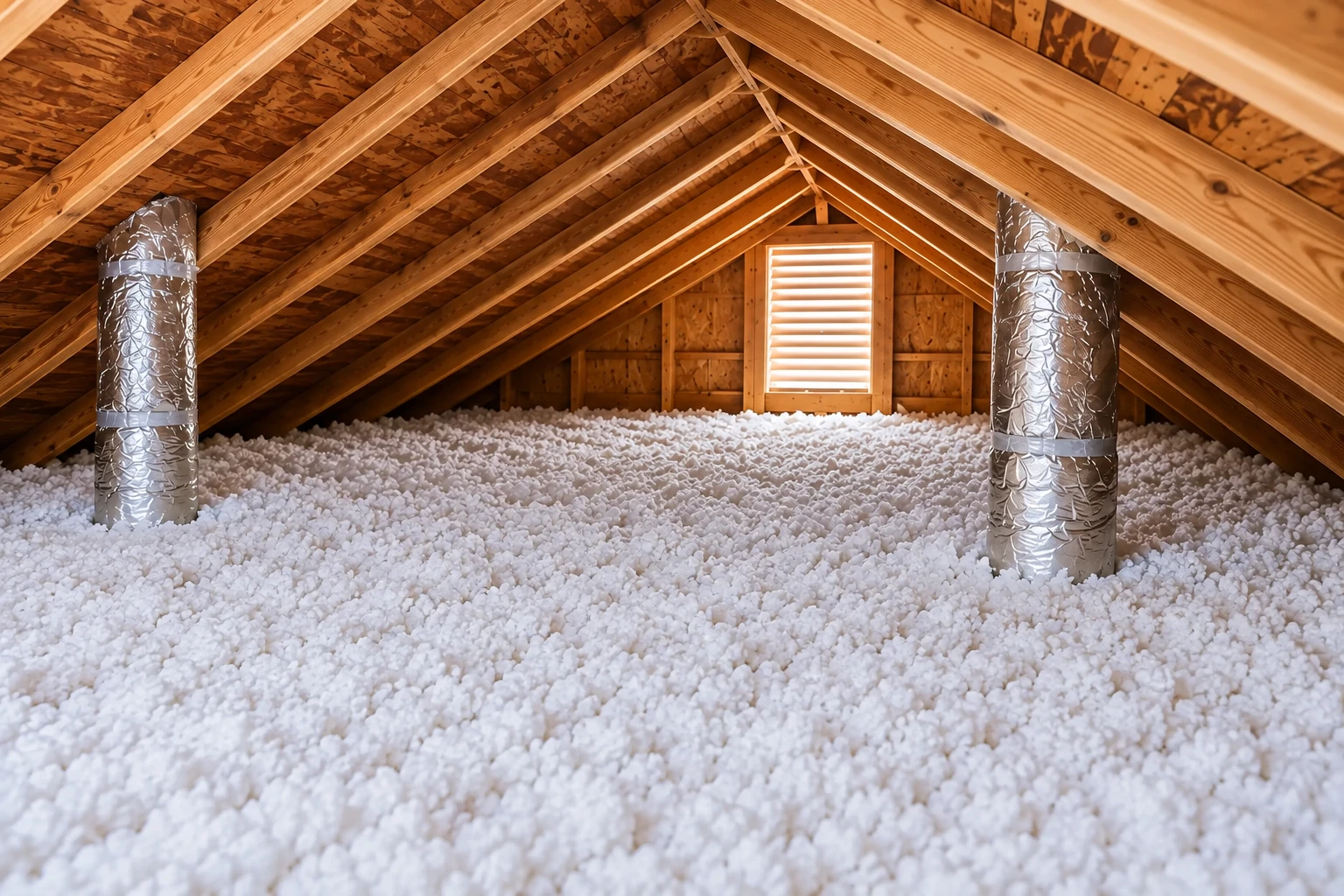
Blown-in insulation in Fort Walton Beach FL - an attic covered evenly, edge to edge
Hot upstairs rooms and a climbing power bill? We seal the attic floor first, then blow in an even layer across the whole ceiling.
What does blown-in insulation actually do for my attic?
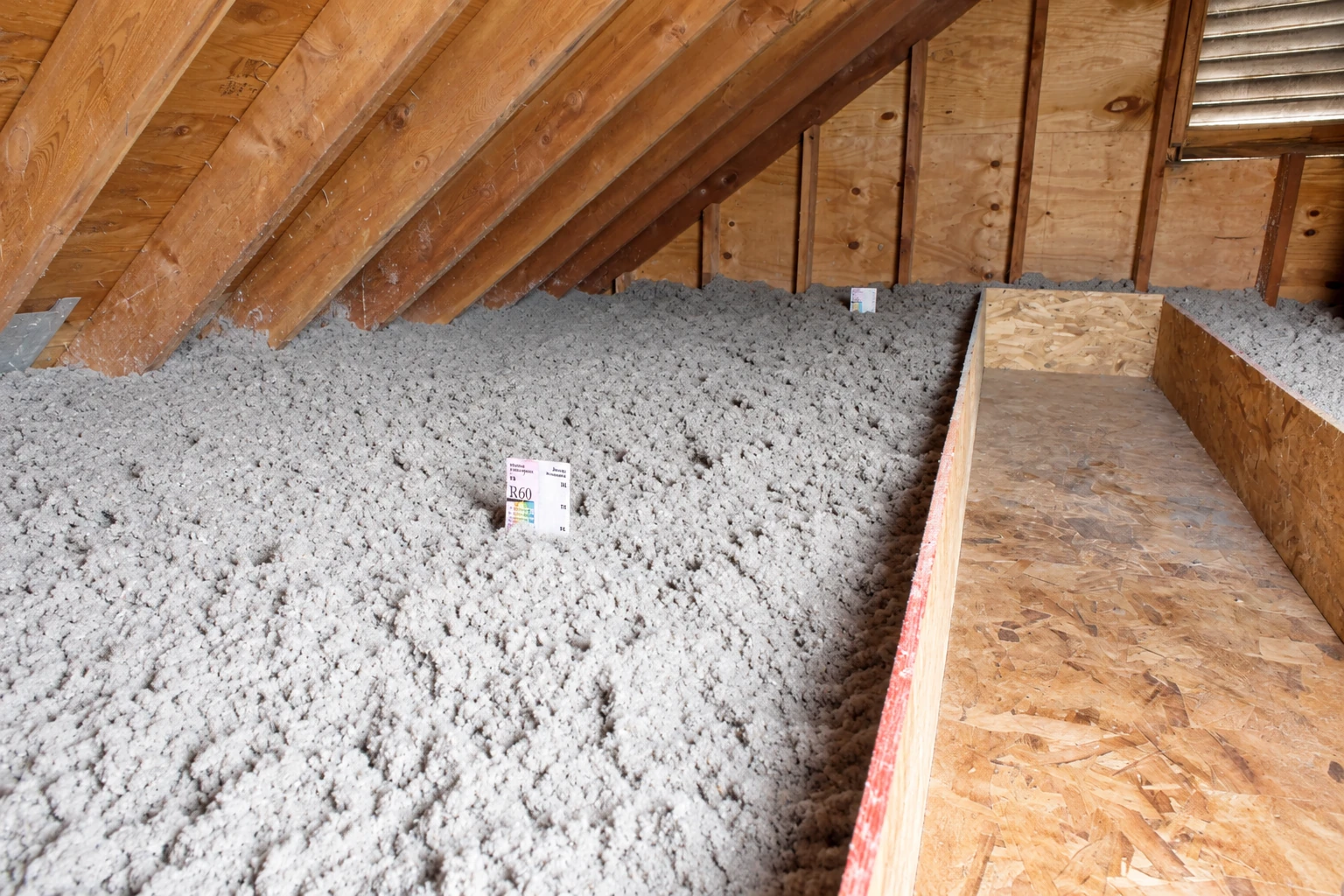
Blown-in insulation is loose cellulose or fiberglass that we blow through a hose across your attic floor. For most Fort Walton Beach homes, it's the usual way to bring a thin, packed-down attic back up so the ceiling holds back heat and the rooms below stay closer to what the thermostat says.
Most calls start with one bedroom that won't cool down or an upstairs that's hot by noon. When I get up in the attic, I usually find a few inches of old material that's packed flat, thin at the edges and full of gaps. The price moves with the size of the attic, how many inches are already up there, which material you pick, how much sealing it needs and whether the old layer has to come out first. The schedule turns mostly on that last part and on whether a permit is needed, so I'll give you your own number and a plan once I've been up there and seen it.
How we handle a blown-in insulation job
I start by getting up there and looking at what's already down, because a layer that got soaked from a roof leak or filled up with droppings doesn't get better with fresh material on top. Then we weigh cellulose against fiberglass for your attic. Once you've picked, our crew air seals the attic floor, closing the gaps around can lights, pipes, wires and the hatch so the new insulation isn't fighting a draft. Baffles, short chutes that hold insulation back from the vents, go in at the eaves so the attic keeps breathing. Then we blow it in as even as we can get it across the whole ceiling, with extra care at the edges, since that's where most attics I open come up thin.
If the old layer is too far gone to cover, we do the insulation removal first, because new material over a bad layer gets you a job done twice. If the walls or the room over the garage are drafty too, our home insulation work picks up where the attic leaves off.
Topping up what's already there
This suits an attic where the old insulation is dry and clean but thin or packed down. We seal the gaps and blow fresh material over it, which keeps the job smaller than starting from bare drywall.
Clearing it out and starting over
This is for attics where the old layer is wet, moldy or has had animals living in it. It costs more up front, but it's the only way the new insulation isn't sitting on the same problem.
Spray foam instead of loose fill
Foam costs more and seals air while it insulates. For most attics I'd rather seal the gaps and top up with loose fill, but if your ductwork runs through the attic, foam starts to earn its price.
What changes a blown-in insulation job in Fort Walton Beach
Whether a blown-in job needs a permit is the city's or the county's call, depending on where the house sits. A Fort Walton Beach mailing address doesn't tell you which, so that's the first thing I check. When a job needs a permit, we pull it and handle the inspections. Inside city limits, Fort Walton Beach says permits are typically reviewed in about 5 business days but can take up to 15 depending on the application, so when one's needed we build that wait into your start date. If you'd like to ask yourself, the city's building inspections office takes permit questions at (850) 833-9605 or building@fwb.org.
A lot of the attics we open around here have the ductwork and air handler sharing space with the insulation, so we work carefully around the equipment and the low edges where coverage runs short. We see the same kind of attics on jobs in Niceville and Navarre.
What blown-in attic work looks like
Why call us for blown-in insulation
The owner sees your attic first
I come out myself, get up in the attic and write the estimate, then our install crew does the work while I check in as it goes. That means the person who looked at your attic is the one who answers for what gets done in it.
Telling you what's wrong since 2017
I started this business in 2017 after a good while crawling through attics for other people, and we're best known for saying what's actually wrong up there before we try to sell anything. Some attics need a top-up and some just need sealing, and you'll hear which one yours is.
Licensed and insured for attic work
We're licensed and insured. Ask that of anyone you let up into your ceiling, because one wrong step between the joists puts a foot through the drywall below.
Navarre to Crestview, one call
We work out of Fort Walton Beach and cover the cities around it, from Navarre to Miramar Beach and up to Crestview, plus plenty in between. If you manage rentals across a few of those cities, one crew can handle all of them.
On this job, the order matters more than the material. That means sealing before blowing and sound insulation underneath. Our work is backed by our satisfaction guarantee. Send us a note about your attic or call (850) 357-6549, and I'll come take a look.
(850) 357-6549Get a blown-in insulation estimate for your attic
We reply within one business day to set a time, then I come out, get up in the attic and write your estimate. It's free, done at your house, and there's no pressure to book. It helps if you tell us roughly how big the attic is, what kind of house it is and whether you have gas appliances or a fireplace.
Blown-in insulation questions from Fort Walton Beach
Is cellulose or fiberglass better for my attic in Fort Walton Beach?
Fiberglass is the safer pick if your attic might ever get wet, because it won't be ruined by a soaking, while cellulose breaks down when it's saturated. Cellulose slows air movement better and costs less, so in a dry attic with the sealing done right it holds its own. Cellulose is also too heavy for mobile home ceilings, where the lighter fiberglass can be used.
What causes blown-in insulation to lose depth over time?
Gravity and vibration pack it down. Loose-fill cellulose settles 10 to 20 percent over time, while loose-fill fiberglass settles 2 to 4 percent. So a cellulose layer gives up more of its depth as the years go by, and that's one more thing to weigh when we pick the material for your attic.
What is the best way to prep an attic before blowing in insulation?
Seal it first. Department of Energy guidance for existing vented attics says to air seal all openings through the attic floor before insulating, and adding insulation is the natural time to do it. A Department of Energy guide also calls it essential, before sealing, to check how much fresh air the house needs and whether stoves, ovens, fuel-burning furnaces and fireplaces vent properly. If you have any of those, we look at that first.
How much does blown-in insulation cost in Florida?
Blowing fiberglass into a typical 1,800 square foot attic in Florida usually costs about $2,000 to $4,500 for the job. That's a statewide figure for fiberglass, not our price. Your number depends on what I find up there, so I write it after I've been in the attic.
Is blown-in insulation better than batts for an attic?
Usually, yes. A Department of Energy fact sheet says blowing loose fill into an attic usually costs less than laying batts and gives better coverage, though installation costs vary. In my experience, loose fill also fills in around wires, pipes and odd framing, where batts tend to leave gaps.
Do I have to leave the house while you blow in attic insulation?
Usually not, because loose fill doesn't cure like spray foam, so there's no waiting period before you can come back inside. The mess stays mostly in the attic and at the hatch, and we cover the path in and clean up when we're done. Keep kids and pets clear of the hatch and the hose while we work.
Book an attic check for sealing and blown-in insulation
Our phone hours run into the evening and through weekends, so call (850) 357-6549 after work or send the form anytime.